How I Learnt about Dysregulated Nervous Systems – in real time
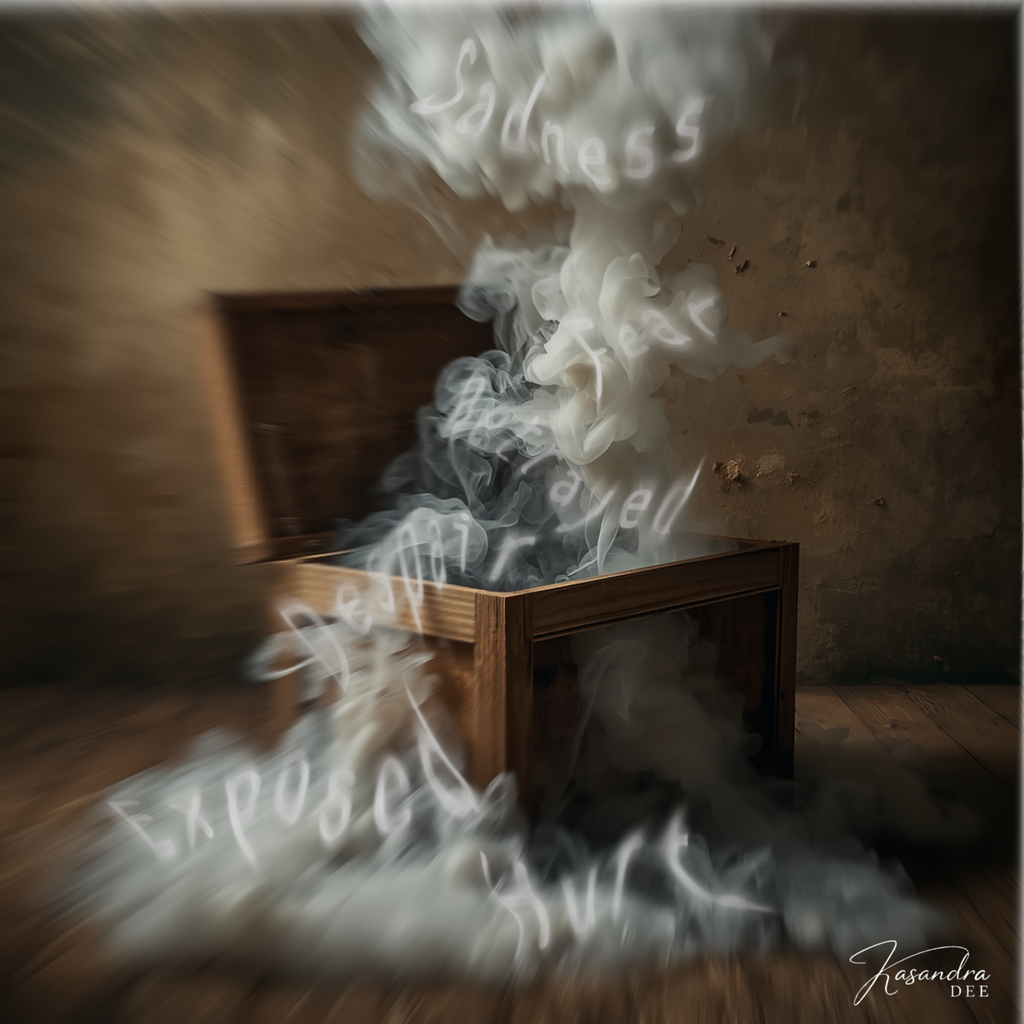
In 2024, my nervous system didn’t just struggle — it shut down. (Read more about that here)
I had always been the competent one. The reliable one. The one who kept going, no matter what.
But in that moment, I couldn’t. And I didn’t understand why.
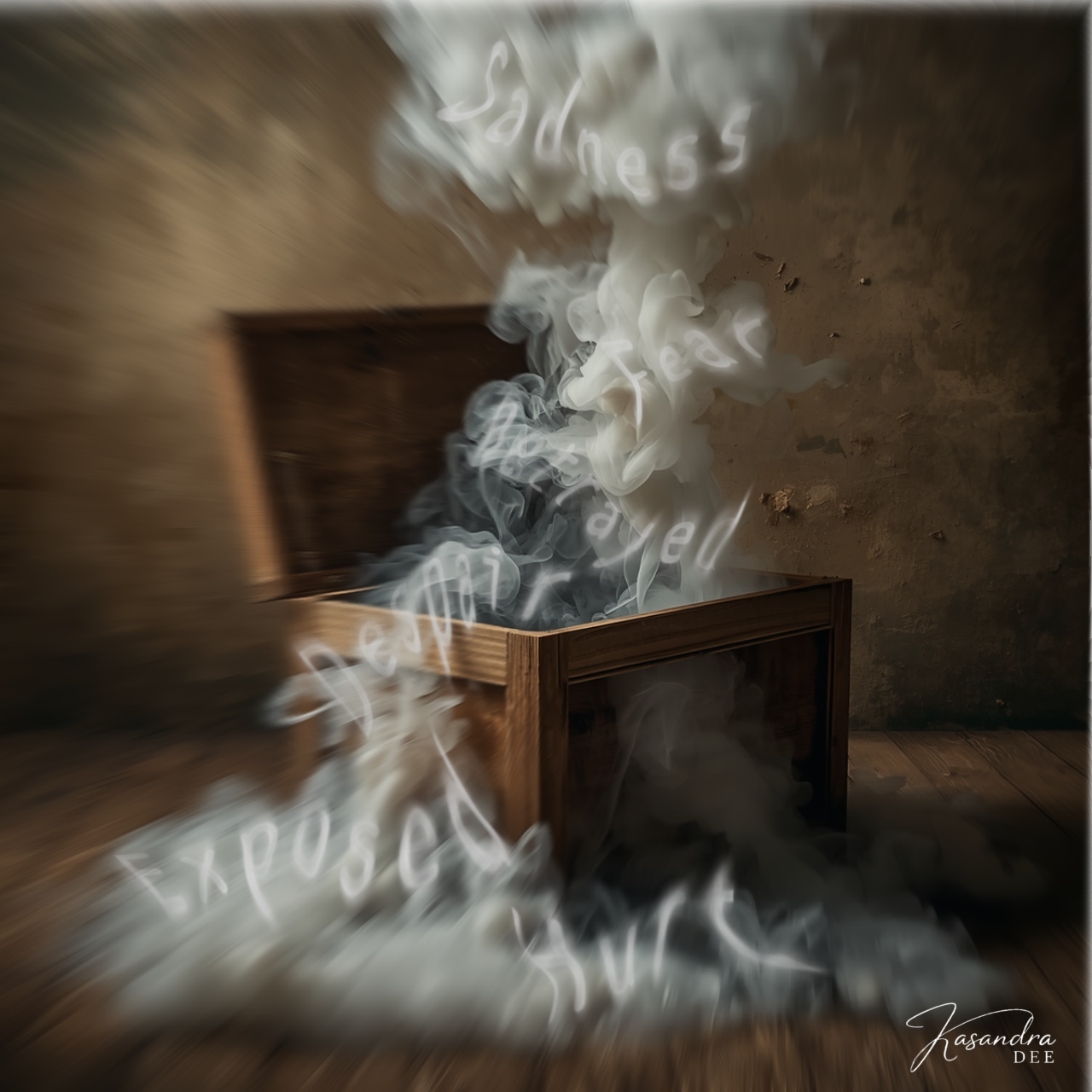
“It’s going to be like opening Pandora’s box.” That’s how my GP described what was coming. And he was right. Once the lid began to lift, everything I had held together for years began to surface.
I assumed I could think my way out of where I found myself. If I worked it all out – what had happened and why, then my healing would follow. But my counsellor told me something that changed everything: my first job was to calm my nervous system.
Not fix it. Not analyse it. Calm it.
At the time, I didn’t even know what that meant.
What I Didn’t Know About My Nervous System
Before therapy, I had never heard of nervous system regulation. I didn’t know what a dysregulated nervous system felt like — even though I was living in one.
One of the first concepts I learned was the window of tolerance, developed by Dr Dan Siegel. This is the healthy zone people operate in, when we feel steady, think clearly, and respond rather than react.
Outside of it, we move into survival states of:
- Hyper-arousal — anxious, overwhelmed, panicked
- Hypo-arousal — shut down, numb, disconnected
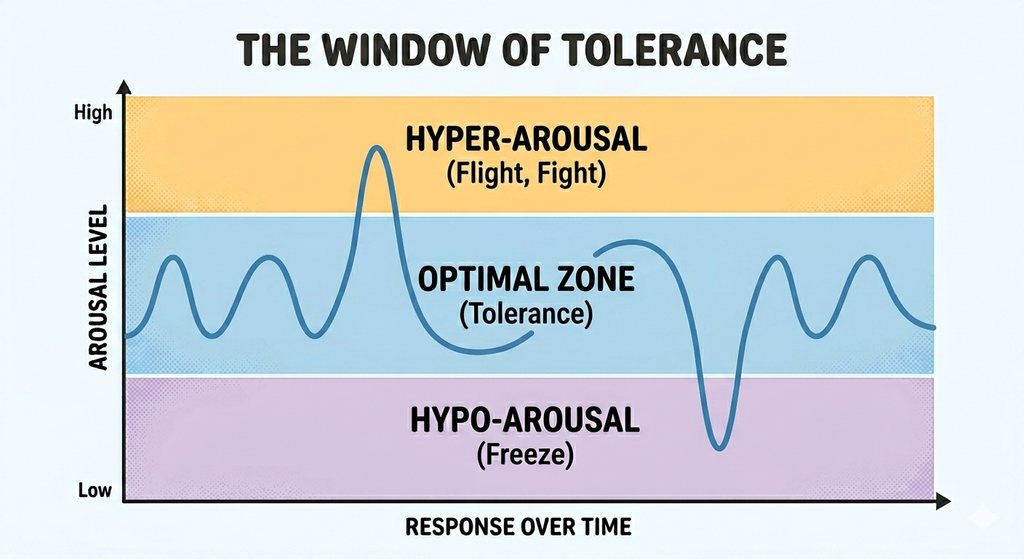
A person with a healthy nervous system may move into these states but is able to return to balance without negatively impacting themselves or the people around them.
Mine didn’t. And in fact, for years I’d been slowly and without realising, moving to longer and longer periods outside my window of tolerance.
And then there was a moment — a catalyst — that tipped everything over.
When Everything Shut Down
In October 2024, my system collapsed into a deep hypo-arousal state. My body felt completely shut down.
I stopped wanting to leave the house. More than that — I felt like I couldn’t. I was afraid I wouldn’t be able to hold myself together around other people.
I still got out of bed most days, but only because I didn’t want to worry my husband. And once out of bed the basics felt overwhelming. Showering. Getting dressed. Eating.
I wore whatever I found on the floor and tied my hair back. That was all I could manage. I went from put-together to bare minimum.
I had to force myself to eat and drink. The hunger just wasn’t there. The weight loss was obvious. My clothes hung off me. My skin looked pale. My eyes were dull.
Most days, I sat on the couch with The Resident playing in the background. Hours would pass, and I hadn’t taken anything in.
Doing the Bare Minimum to Survive
If I’m honest, I didn’t want to get better. If I had been alone, I don’t know that I would have tried. But my husband was grieving the loss of a parent, and I couldn’t add to his pain. My children didn’t need more worry.
And so, for them, I focused on the basics.
Water.
Food.
Getting out of bed.
Showering.
Three meals a day — often just a Marmite sandwich on white bread. Not because I wanted to, but because I needed to.
These weren’t wellness habits. They were survival.
The Small Things That Helped
Slowly, I added movement. Even when I felt like I had no energy, I noticed something: I felt slightly better after moving my body. That tiny shift was enough.
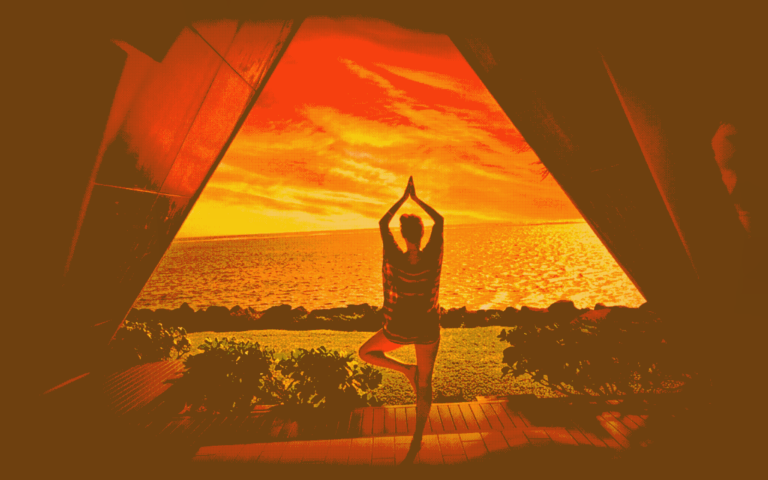
In the mornings, I lay in a yoga child’s pose. Sometimes for ten minutes or more, until I could move a little. Then a little more. In the afternoons, I took short bush walks.
With my therapist, I experimented with different ways to regulate my nervous system.
- being outside in the sun
- gentle movement
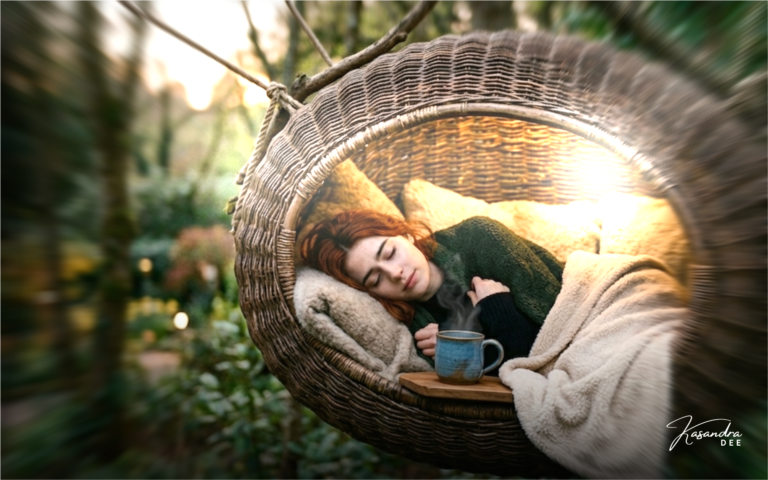
- rocking in my egg chair, or repetitive motion
- journaling
- heel drops
- simple grounding tasks like ironing
- repetitive tasks like knitting
None of it was dramatic. But it worked.
Learning to Come Back to Myself
Over time, I started to notice small windows where I felt okay — calm, present, steady.
So I kept going. Repeating the things that helped, no matter how small they seemed.
What Comes Next
In my next post, I’ll share more about why 2024 became the year my nervous system finally said:
“No more.”
*Everyone’s trauma is different. How trauma affects people is individual. These have been my experiences and what I have learnt about myself through various channels however they are not designed to replace your own therapeutic advice or intuition.
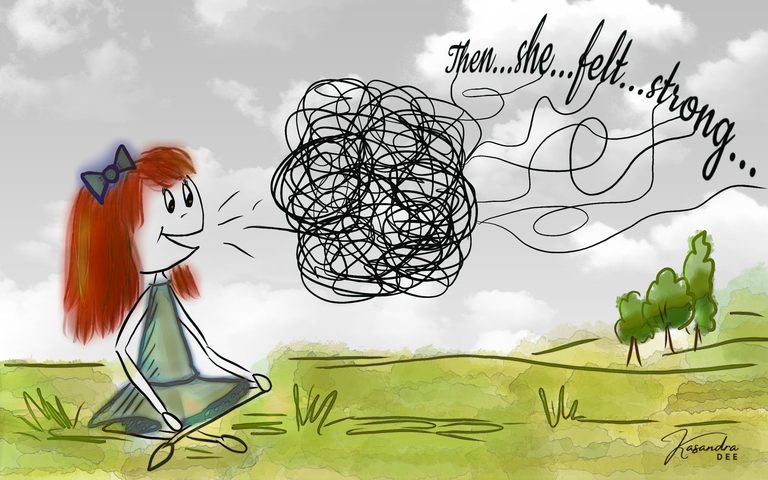
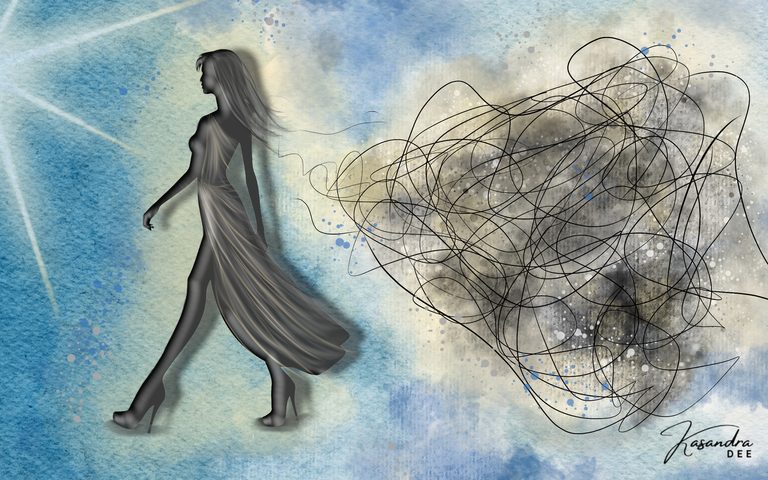
**Digital art by Kasandra Dee (using some AI elements)