
How Trauma Lives in the Body: Learning to Process Emotions After Childhood Harm

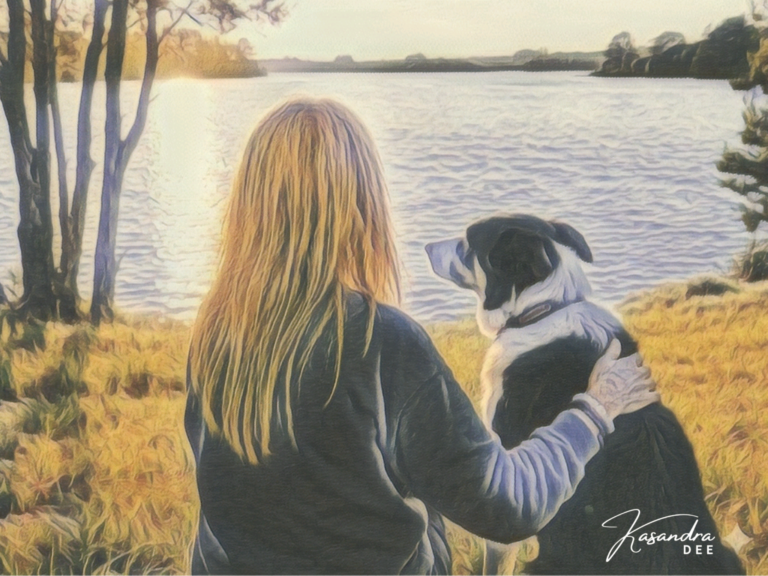
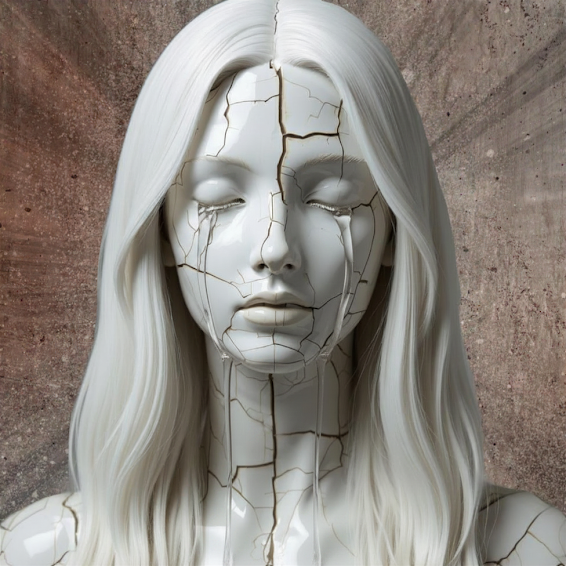
**Digital Art by Kasandra Dee (using some AI elements)
I spent most of my life unable to access my emotions.
I remember a friend looking at me quizzically when I shared that my dog had died. I told her I was heartbroken, but I had no urge to cry.
She suggested I write a letter to my dog, and maybe even read it out loud where we had buried her.
Although externally I politely considered it, I remember thinking, there’s no way, thank you very much.
It became a bit of a family joke that I had no emotions. The whole theatre could be in tears during a sad movie while I might feel nothing more than a lump in my throat.
Emotions were intangible to me. Abstract. Impossible to grasp. I would hear the terms “feel your feelings” and “processing emotions” and I genuinely had no idea what they meant.
Learning that healing required me not only to feel my emotions, but also process them, felt completely foreign.
And why did I need to process emotions?
Because they did not magically disappear simply by being ignored.
They waited. In my body.
Emotions living in the body
Emotions are not just thoughts. They are physical experiences too.
When something frightening or overwhelming happens, the body responds automatically. Muscles tense. Breathing changes. Heart rate increases.
Sometimes the body settles afterwards. Maybe it never fully gets the chance. And in those cases, the nervous system can continue carrying the pattern of the experience long after the event itself is over.
Not like a literal file stored in a body part, but more like the body learnt a survival state and keeps replaying it.
Although I was never fully aware of it, my body was carrying evidence of past trauma. Migraines, unexplained pelvic, hip and nerve pain, urinary incontinence. All of which had no medical explanation.
A Childhood Memory I Still Carry
I think I almost drowned when I was around seven years old.
What I do remember is falling into a swimming pool. I remember sinking below the surface, as my arms and legs could no longer do the work to get to me to the side. My eyes underwater could see blurred figures of other children standing on the grass, watching me. I hoped one of them would find an adult.
Then my memory cuts.
The next thing I remember is being inside. Adults were sitting around drinking, smoking, laughing and talking. I was cross legged on the carpet beside my mother’s armchair.
I started to cry. And I remember being told off because I was okay now and there was nothing to cry about.
So I stopped.
Even though I was physically safe, my body clearly was not finished responding to what had happened. Tears flowed. My breathing was probably altered. My muscles more than likely were shaking or tense.
My body was trying to complete its survival response. But it was not being allowed to.
I learnt very early that fear was acceptable, but showing fear was not.
Now stretch that across years of childhood trauma, chronic fear, unpredictability, emotional disregard, and abuse.
It makes sense that I, as a child raised in survival mode, grew into an adult with a nervous system that is hypervigilant, tense, anxious, shut down, or constantly overwhelmed.
My body learnt: this is what survival feels like.
There is talk in wellness spaces about emotional pain living in organs. I do not know whether emotions literally live in specific organs. What I do know is this:
my body was carrying fear long before my mind understood why.
The day I finally broke down and disclosed the sexual harm I had suffered to my husband, my bladder suddenly went rock solid. At first I assumed it was shock.
About six weeks later and to a lesser degree, the leaking began again.
While working with my counsellor, I learned something important: the sensation did not actually begin in my bladder.
It began as a sudden gripping feeling in my solar plexus, followed by panic, then leakage. It began as fear.
For the first time, I started recognising that my body was responding before my conscious mind caught up.
Learning to Process My Emotions
1. Pause and Notice
In 2024, because of necessity I went into what I call my healing cocoon.
I stayed home. I stopped doing almost everything I used to do. I went from constant busyness to stillness. Read more about that here.
At first, the silence felt unbearable. Without constant busyness, everything I had suppressed became louder. All the feelings I had spent years outrunning suddenly had space to surface.
And for the first time in my life, I had to listen to myself.
With practice — and active reminders from my husband and counsellor — I slowly became better at tuning into my body.
I started noticing patterns.
I realised that when I feel mentally stressed or physically uncomfortable, I tuck my thumb into my palm and hold it tightly. I suspect this is connected to sucking my thumb as a child — something I was shamed for.
And when I noticed my thumb tucked into my palm, I am almost always stressed or anxious.
As I worked with this process it became clear to me just how disconnected I had become from my body.
I didn’t recognise hunger until I was shaky. I didn’t notice thirst until I was parched. I didn’t notice cold until I was freezing.
My body had learnt that its needs were only important once they became impossible to ignore.
2. Find the Feeling in Your Body
I always thought the problem began in my bladder.
But when I slowed down enough to pay attention, I realised the sensation actually began higher in my body — a sudden gripping fear in my chest and solar plexus.
My body was reacting before my mind even understood why.
Once I could recognise where fear lived physically inside me, I could begin responding to it differently.
3. Name the Feeling
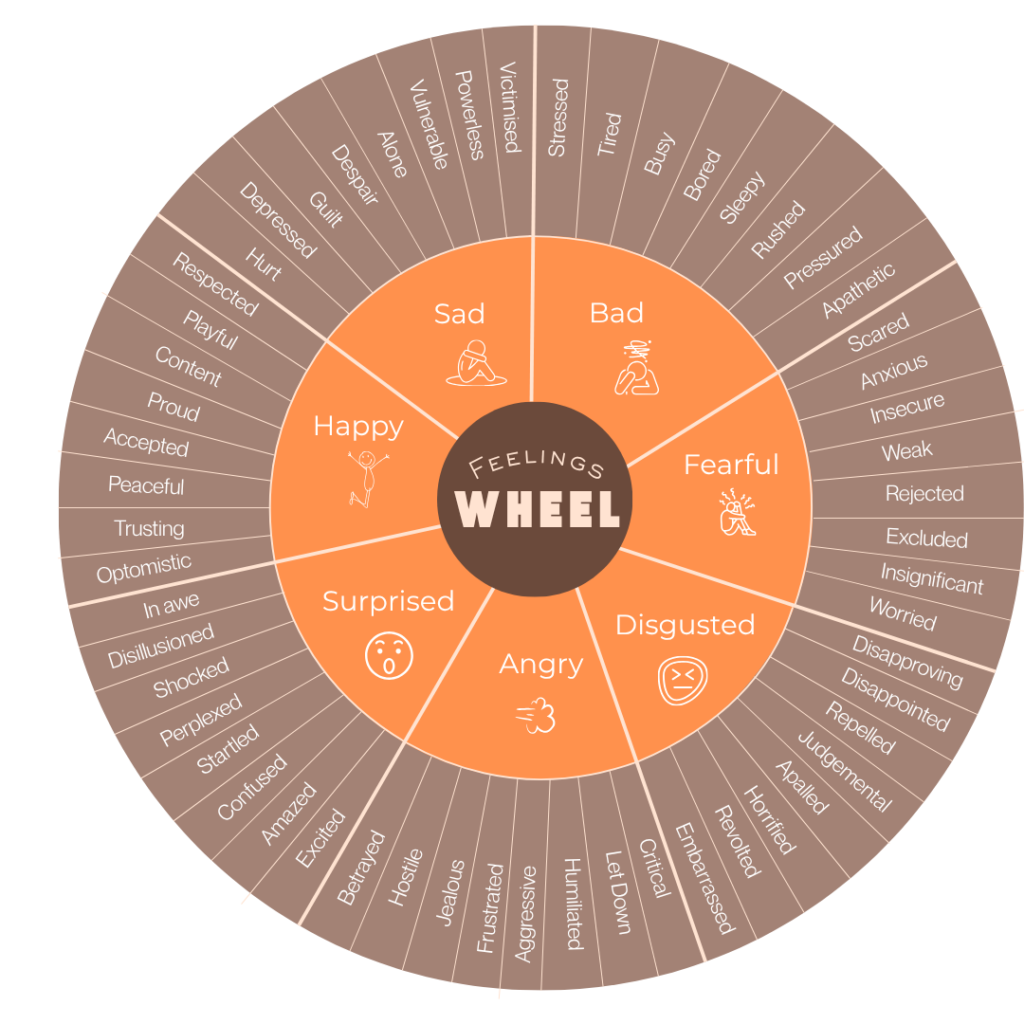
One of the most helpful tools my counsellor introduced me to was a feelings wheel. I still keep one saved on my phone. I’ve learnt I have emotions, it’s just sometimes I genuinely cannot find the words for what I am feeling.
When I recognised that the sensation in my body was fear — not just “bladder urgency” — everything began making more sense.
The more I practise identifying emotions, the easier it becomes.
I’ve included a free copy of a feelings wheel here if it might help you too. More comprehensive versions are available by searching Google.
4. Regulate the Emotion
I know I’m not alone in wanting to skip straight to nervous system regulation. We just want to feel better, right? But true regulation becomes much harder when we try to calm something we haven’t first acknowledged.
Only then can we begin to respond to the emotion, rather than react from it.
Once I became better at recognising and naming what I was feeling, I was able to start experimenting with some regulation techniques.
Slow breathing is usually the easiest tool for me to access when anxiety spikes. I also use this when I feel the urge to rush to the bathroom. I stop, put my hand on my solar plexus and take some deep breaths in and slow breaths out. And once I have control of my body, I slowly walk to the bathroom.
In other types of anxiety I find repetitive and rhythmic movements useful such as knitting, rocking in a chair, or gentle hip sways.
When I feel low or shut down, I need different things entirely. Walking my dog to simply remind my nervous system that the world contains sunlight, trees and ordinary moments.
It took me nearly a year of trial and error to understand what actually helps my body feel safe.
I’ve included a free PDF with 101 regulation ideas that may help you experiment with what works for your own nervous system. You can access it from here.
5. Ask: What Is This Emotion Pointing To?
The final step in processing an emotion is very much still a work in progress for me.
It is asking myself the question – what is this emotion trying to tell me? What do I need?
Sometimes my own needs range from rest and understanding to boundaries or connection.
Often the answer is not immediately clear. Some weeks I will fill pages of words trying to understand why a small interaction affected me deeply.
But over time, patterns begin to emerge. The same triggers. The same fears. The same unmet needs.
What Healing Is Teaching Me
One of the most unexpected teachers in this season of my life has been our dog.
She came to live with us a year ago after a difficult start to life, and despite being safe now, she still showed clear signs of nervous anxiety and hypervigilance.
Watching her slowly learn safety has taught me so much about trauma, regulation, trust, and healing.
Maybe more than I expected. I’ll share more about her next time.
Still Learning
For most of my life, I thought healing meant “getting over it.”
Now I think healing is something very different.
I think healing is learning how to stay present instead of abandoning yourself.
It is learning to listen to the body that carried you through survival, but now needs something different.
Some days I still miss the signals completely. But, at least, I know my body has been trying to protect me all along.