What Is Trauma? It’s More Than the Terrible Events That Happen to You
I never thought I had trauma.
Not really. I knew what trauma looked like, and it didn’t look like me.
Sure, I had come from a broken family, alcohol abuse had featured, and then my father had died in a car accident. But I’d come through just fine. And I became very good at telling myself I was fine. Even when things bubbled under the surface.
Perhaps that was part of the problem. I had misunderstood what trauma actually was.
I thought trauma was the event. The terrible thing, or things, that had happened. I didn’t know that trauma isn’t simply about what happened to you. It’s about what was happening inside you as a result of the event, and how you were supported.
As a child I didn’t have the words, or the emotional capacity to process what was happening. So I did the only thing I could. I put it away.
After all, that was the only acceptable way forward in my family.
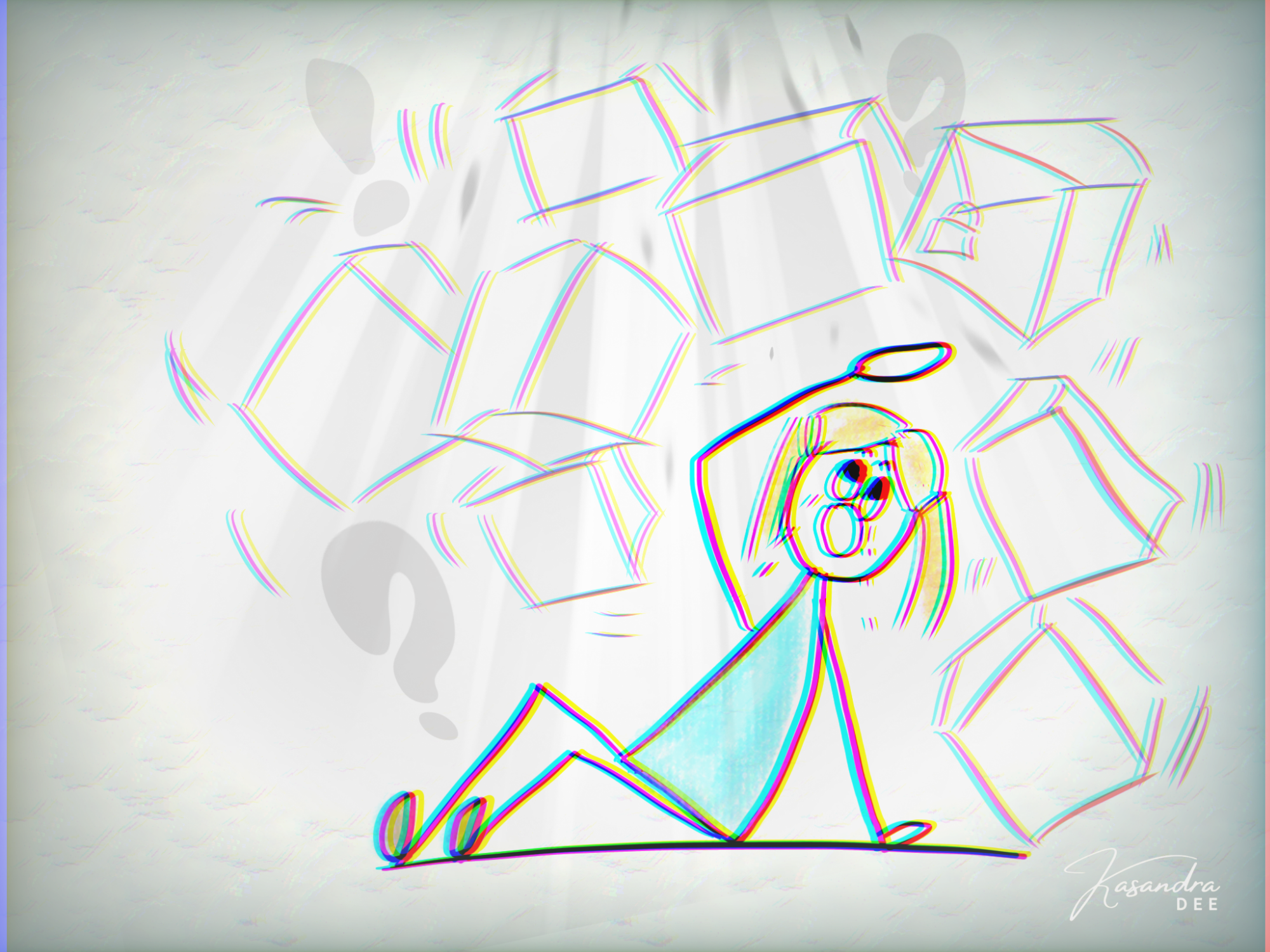
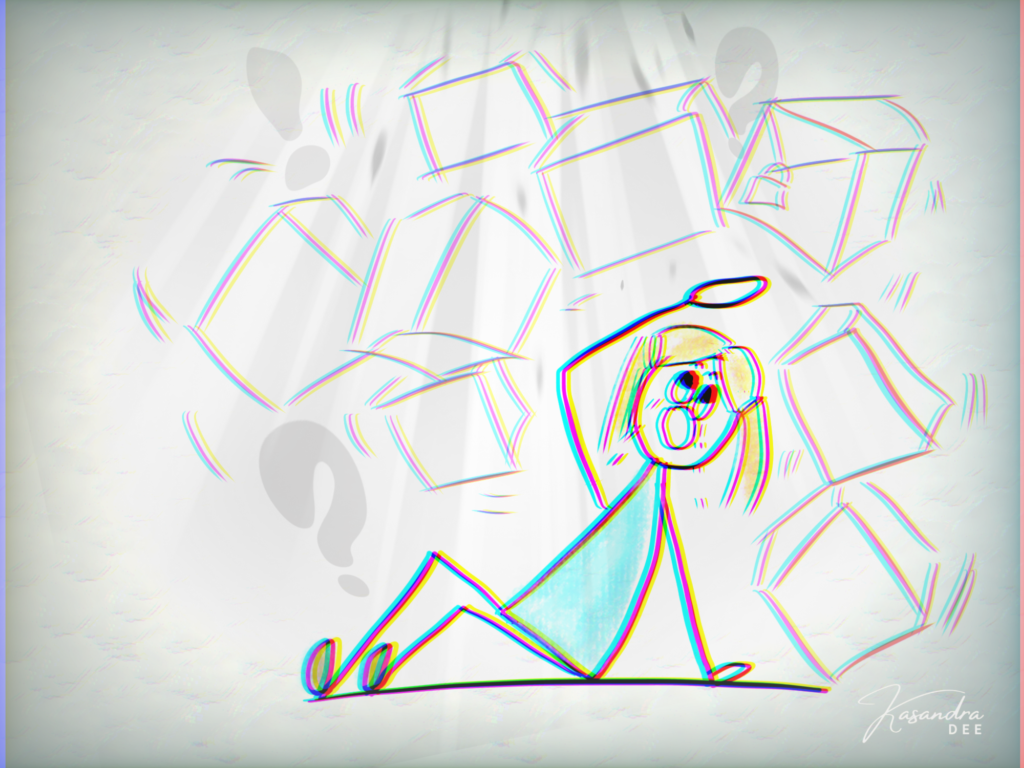
My attic full of boxes
For me, being emotionally resilient meant just ‘getting on with it’. Maybe allow myself a hot headed moment, but then to soldier on without addressing it.
Sometimes that is the best way forward. Other times, I was using it to avoid and suppress things that needed addressing. Instead I would tidily box up the feeling and carry it upstairs to an attic space in my mind.
I didn’t unpack anything. I didn’t sort through it. I just placed it down and closed the door.
The broken family went up there. The things I heard and saw went up there. The things that happened to me that I couldn’t possibly have understood, and the loss of my father all went up there.
Entering adulthood, this was now my automatic response to uncomfortable emotions. Someone withdrew from me, I disregarded it and when they were ready I welcomed them back with open arms. I was told lies, I ignored them. I overheard and heard of people speaking badly of me, I kept them in my life without addressing it. My attempts at setting boundaries failed. I pushed those feelings into the attic too.
And I kept living downstairs.
Because I did well at school, grew up, had successful relationships, worked, raised a family and did all the things that adults do, I assumed the attic wasn’t important.
I didn’t realise that putting something away isn’t the same as dealing with it. The boxes don’t disappear just because I close the door. They still take up space. They still have weight.
And over the years, I just kept adding more. I became very good at functioning underneath an attic full of things I had never dealt with.
Until eventually, the floor couldn’t hold the weight anymore.
And it collapsed.
So what actually Is Trauma?
After spending much of my life thinking trauma was something that happened to you, I understand it differently now.
And with that understanding, some of the things I thought were simply parts of my personality look different. As a child who felt inconvenient or ridiculous for expressing my feelings, and who couldn’t escape that environment, I learned to disconnect from everything that felt too difficult to hold.
And I spent most of my life genuinely believing this was a healthy mindset.
It wasn’t. I had just learnt how to live downstairs.
The first box: loneliness
My mind sometimes wanders back to moments when, as a child, I felt alone with emotions that were too big for me.
Crying after a drowning experience wasn’t acceptable.
Feeling sad at my birthday party because I had to go last in all the games.
Waking scared to find no adult in the house, then being reprimanded for ‘causing a scene’ when I stood on the door step wailing for my mother.
Some wounds don’t leave bruises. They leave questions. Do I matter? Am I asking for too much? Is it safer not to need anything?
I believed it was, so I learnt to need less.
Chaos, boxed up with a bow
Large chunks of my childhood are still a mystery to me. I have few memories of anything before the age of seven.
But from the threads I have gathered, our home was “the party house”, with “a lot of alcohol and people coming and going”. My parents’ relationship has been described as difficult, and they were living separate lives early in the marriage.
I have memories of hearing and seeing things that no child should hear or see. Looking back, I can see how instability quietly became normal. And I adapted.
Placing any confusion and uncertainty into the attic.
A box firmly locked with an invisible padlock
Most of my memories of sexual harm are hidden behind amnesia.
Only fractured memories remain. Flashbacks. Sensory memories. Unusual fears and phobias.
To this day my body reminds me that nights are not safe. It wakes me often. Sometimes with unbearable pain in my pelvis, pain that can bring me to tears. Sometimes with visions of men in my room, someone grabbing my foot, spiders in my bed, unfamiliar and repetitive sounds, or a physical jolt of fear that wakes me.
It is no surprise that this part of my attic is filled with boxes I can’t open. Boxes I can’t even remember putting there.
Invisible padlocks keep those boxes closed – even from me.
A coffin-shaped box
And then when I was 11 years old, my father died.
He hadn’t been in our lives for some time, but the finality of never seeing him again overwhelmed my eleven-year-old mind. I wasn’t only grieving my him. I was grieving the possibility of ever having the father I wanted.
My mother has since told me that she thought I was fine because I cried at the funeral.
Once the funeral was over, the tears stopped – for good. It was back to school. Back to normal. Grief became another layer which settled quietly on top of the previous layers.
Another closed box stacked beside the others.
And life goes on
That’s the thing about unresolved emotions. Life doesn’t just stop.
From the outside, I probably looked like someone who had successfully moved on. And most of the time, I thought I had.
But surviving isn’t always the same as healing. With hindsight, I can see how hard my nervous system was working every single day.
I just didn’t know that’s what it was doing. I thought it was just me and all my weird foibles.
The day my ceiling collapsed
2024 didn’t simply uncover old trauma. It became a trauma of its own.
A few boxes were added in quick succession during that difficult year.
The attic had been accumulating boxes for years now and I hadn’t noticed the beams bending. I hadn’t heard the floorboards creaking. Life was still happening downstairs, so I carried on with it.
Until one day, when the ceiling gave way.
And everything inside the attic fell out, and into the house below.
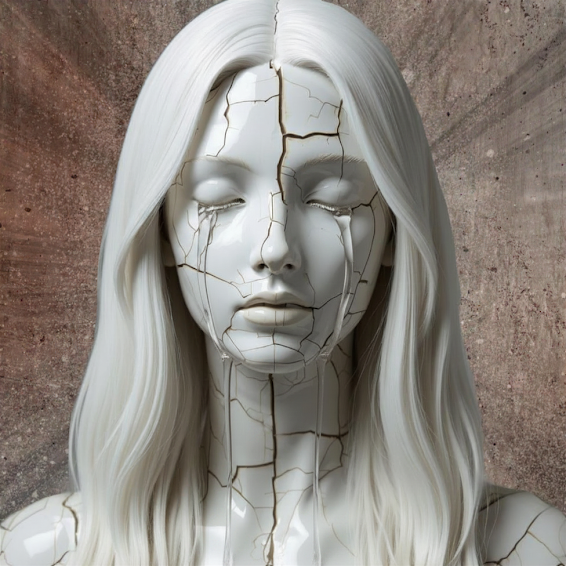
The decades of emotions spilled out uncontrollably, my body and mind retreated, family members fell away and my identity was stripped back to someone I didn’t recognise. This was the trauma response to all that had come before.
And the hardest part was realising that I couldn’t simply put it all back upstairs. The attic had collapsed. There was nowhere left to hide it.
For the first time, I had to look at what I’d spent a lifetime putting away.
I see myself differently now
Once I began to understand my trauma, I began to understand myself differently too.
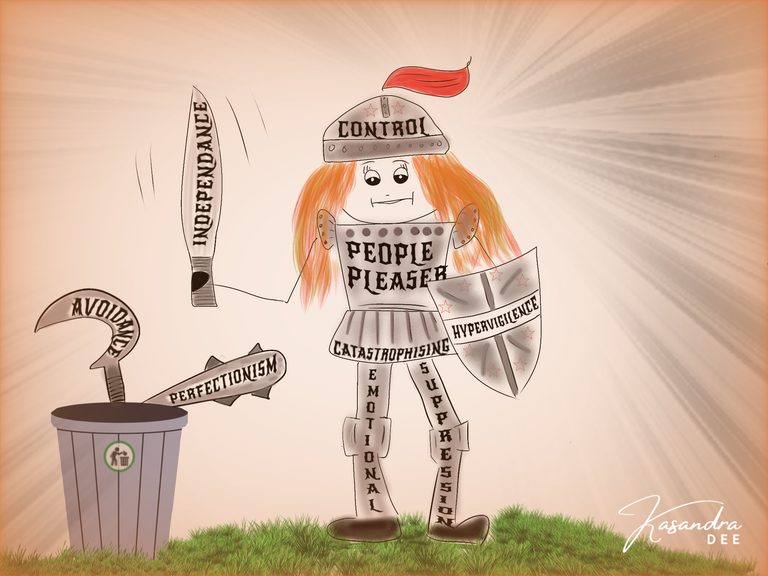
Many of the things I had believed were simply my personality… weren’t personality at all. They were survival. They were ways my developing brain changed to survive in a world that hadn’t always felt safe.
And that’s where I want to go from here.
In my next post, I’m sharing the trauma responses I spent decades mistaking for who I was.
Sometimes the most compassionate thing we can do isn’t become someone new.
It’s to finally understand the person we’ve been all along.