The Trauma Responses I Mistook for My Personality – Part 1
For as long as I can remember, I was proud of who I was.
I was the reliable one. The organised one. The helper. The woman whose life was a full calendar and an endless to-do list. It felt good to make everyone else’s life easier. It made me feel valued.
I thought all those traits were just me. My personality. My core.
And, if I’m honest, being that person had a convenient side effect: it kept me too busy to feel. There was always another task to finish, another person to take care of, another thing to organise. No time to stop. No time to see what was lurking underneath.
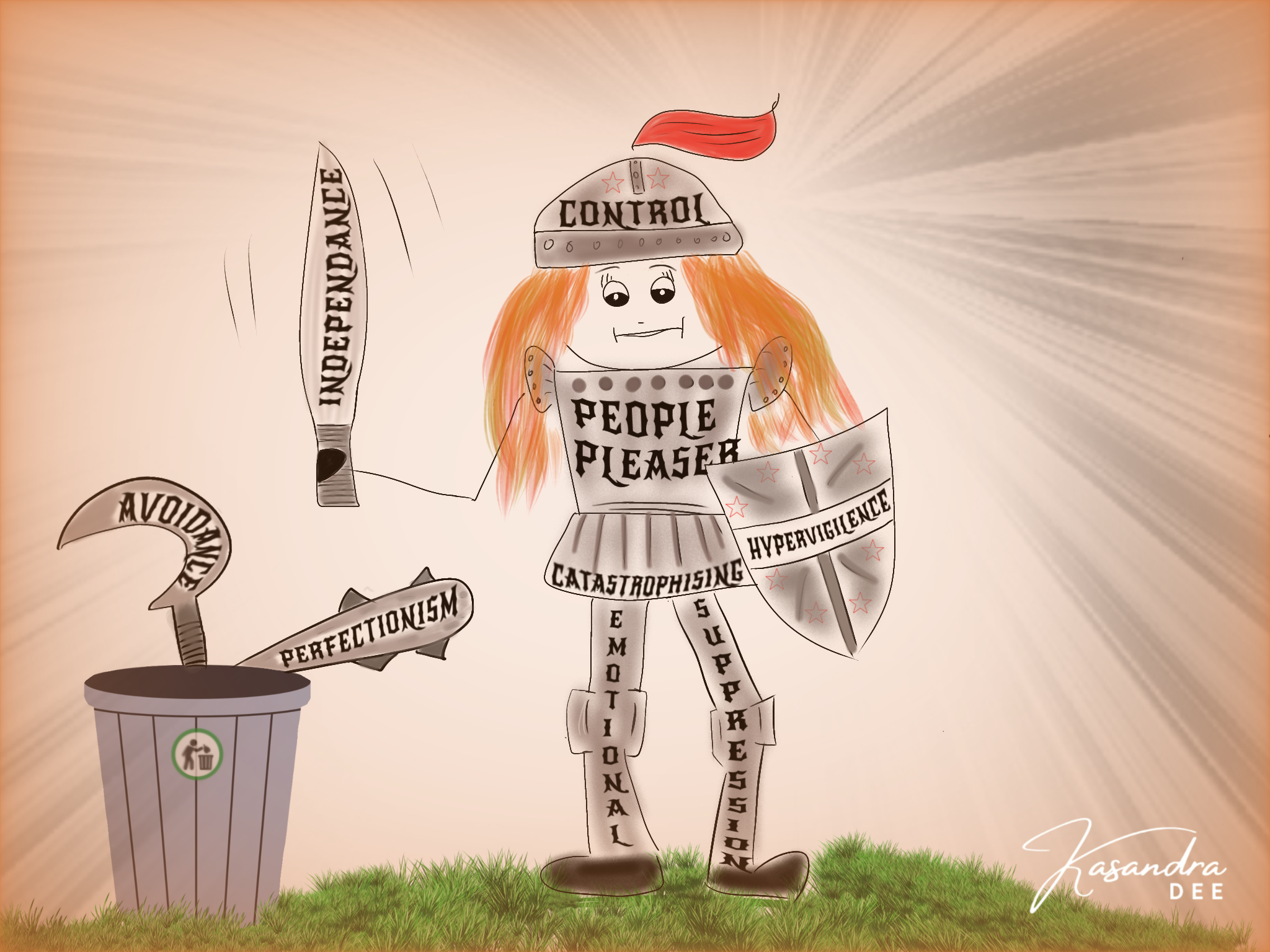
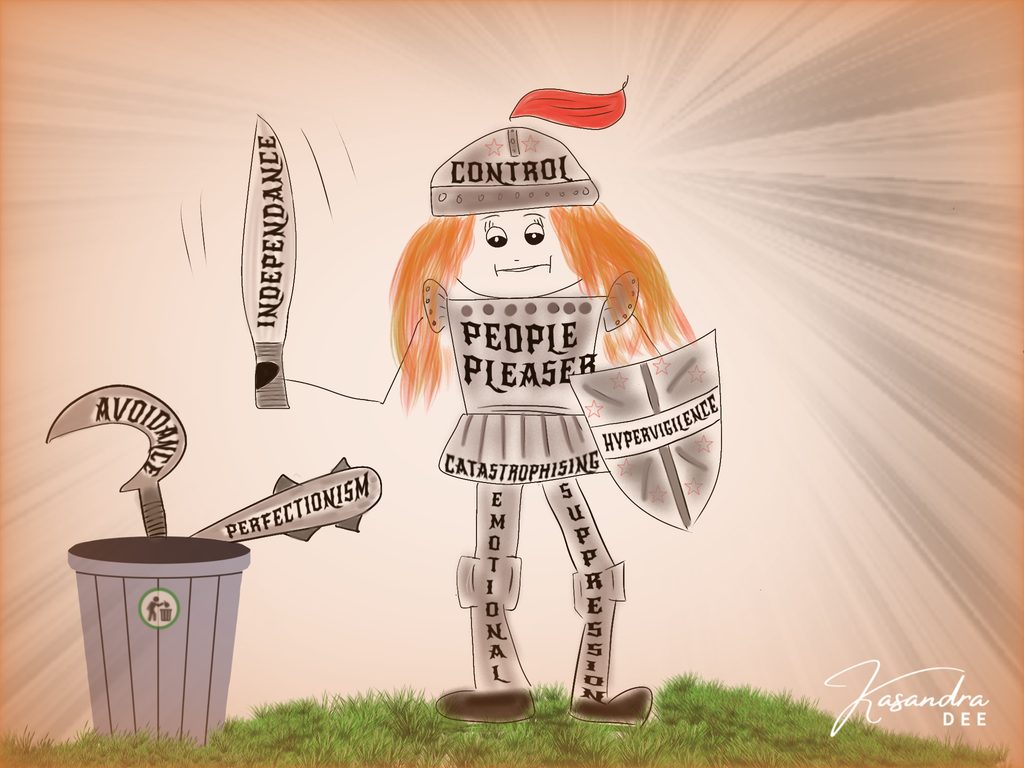
It took me until now to realise that maybe this wasn’t my personality at all. Maybe I was looking at my armour.
I thought I was perceptive. Really, I was scared.
I thought I was perceptive. I felt I could read a room in seconds catching the slightest shift in someone’s facial expression, a fraction-of-a-second dip in their tone, or the way a room’s energy flattened when someone was annoyed.
I thought was just deeply intuitive.
Believing I knew what my husband thought or felt, caused more than a few conflicts though. Within seconds I could assign meaning to a fleeting look or a bluntly worded comment. Before I even knew what was happening, my mind would race and my chest would thump. He’s mad at me. I’m invisible to him. This relationships is doomed.
In the times I brought things up, he’d tell me I had misinterpreted his intentions. But I couldn’t believe him. I thought I was emotionally aware and could read him. Even if he didn’t understand what was going on, I did. Or so I thought.
I now understand I wasn’t just observing people—I was expecting danger.
As a child, I learned that an adult’s sudden change in mood meant I needed to become whatever it was to avoid someone being angry with me. My developing brain learned that if I stayed on guard, no one would be mad with me, and so I stayed ok.
Decades later, as a grown woman, here I was still standing in my own home, heart pounding, bracing for an impact that wasn’t coming.
I thought I was kind. Really, I was trying to earn my right to be there.
I couldn’t just love people; I had to manage their happiness.
Saying “no” felt like stepping off a cliff. But even worse was a relentless need to anticipate what everyone wanted even if they hadn’t asked. Often times getting it wrong anyway.
Recently I organised a simple trip with friends and spent hours—literally hours—staring at a screen, agonizing over ballet tickets. If I buy the cheap seats, will they think I’m stingy? If I buy the expensive ones, will someone feel pressured? What if someone has a bad time and it’s my fault? When I later shared this with my friends, they said, “Honestly, whatever you pick is fine!”
It took me a long time to connect that type of worry back to it’s origins. Growing up, I learned that I was appreciated when I was quiet, helpful, and accommodating . If an adult was stressed, angry, or overwhelmed, my job was to make myself invisible—or make myself indispensable. I learned to read the room before I opened my mouth, constantly anticipating what to do so I wouldn’t become a burden.
And so, I spent much of my life trying to be as easy to love, as frictionless, as humanly possible. I thought that was generosity. Now I see the truth, and it breaks my heart a little: I was scared that if I wasn’t useful, if I caused even a moment of inconvenience or disappointment, someone would be mad with me.
Real kindness flows out of love and overflow. What I was doing flowed out of fear.
I thought I was sensible. Really, I was living in a constant state of emergency.
When my therapist first asked me if I catastrophised, I said no. And I genuinely believed that.
But talking through various experiences in my life, it was clear that at times my brain switched into fear driven catastrophe.
I remember an afternoon when my husband saw trespassers on our property and walked out to tell them to leave. They were just local hunters. But the moment the back door clicked shut behind him, my rational mind evaporated.
My heart slammed against my ribs. My hands shook. Within seconds, my brain had bypassed I hope he’s okay and jumped straight to he’s going to be hurt. I couldn’t breathe. I couldn’t think. I paced, waiting for a tragedy my mind had completely manufactured.
That type of fear wasn’t only activated in big moments. I knew I had a compulsive need for a Plan B, and Plan C – a contingency for the contingency. Probably much to the confusion and annoyance of those I was planning for.
Where did this come from? When things in my early life felt chaotic, unpredictable, or unsafe, I couldn’t fix them. So I did the only thing a child could do: I tried to mentally run through every horrible thing that could happen, believing that if I knew what was coming and when, I could prepare for it.
My nervous system grew up, but it never got the memo that I was safe now.
Where to from here?
It is a strange yet painful thing to realise that the qualities I’ve valued all my entire life—being observant, being selfless, being prepared—were actually dictated out of what I was trying to avoid.
The hypervigilance, people-pleasing and worst-case-scenario thinking weren’t choices, personality or flaws. They were the brilliant, desperate ways a young me stretched and twisted to find calm in a scary place.
These adaptations kept me safe for a long time. But I am tired of living like the emergency is still happening.
I am learning to put down the armour. I am learning to pause when my heart starts racing or I notice my jaw is clenched. I am learning to let people be disappointed without rushing in to fix it. I am learning to sit on the porch, breathe in the quiet, and remind my nervous system that developed when I was a little girl, that the storm passed a long time ago.
If any of this resonated with you today, I’d love for you to join me for part two of this post where I will share three other survival adaptations I have lived with and how I am slowly unpacking them.
Together, we can keep peeling back the layers—not to judge the people we’ve become, but to finally give ourselves permission to grow beyond the storms that shaped us.