The Trauma Responses I Mistook for My Personality – Part 2
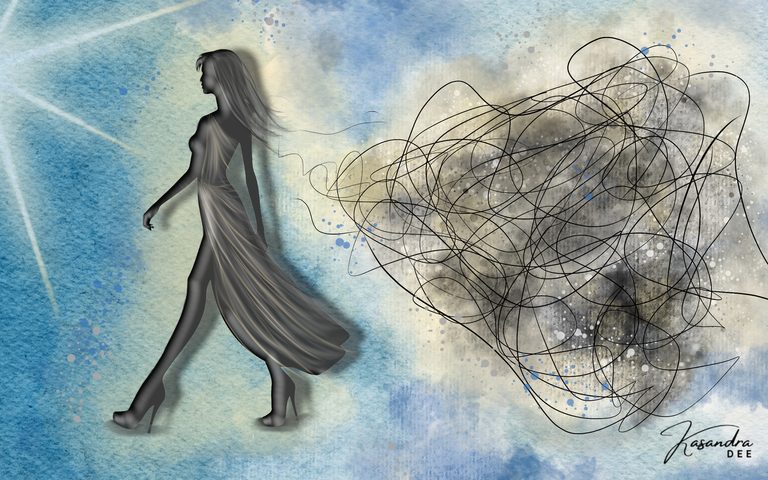
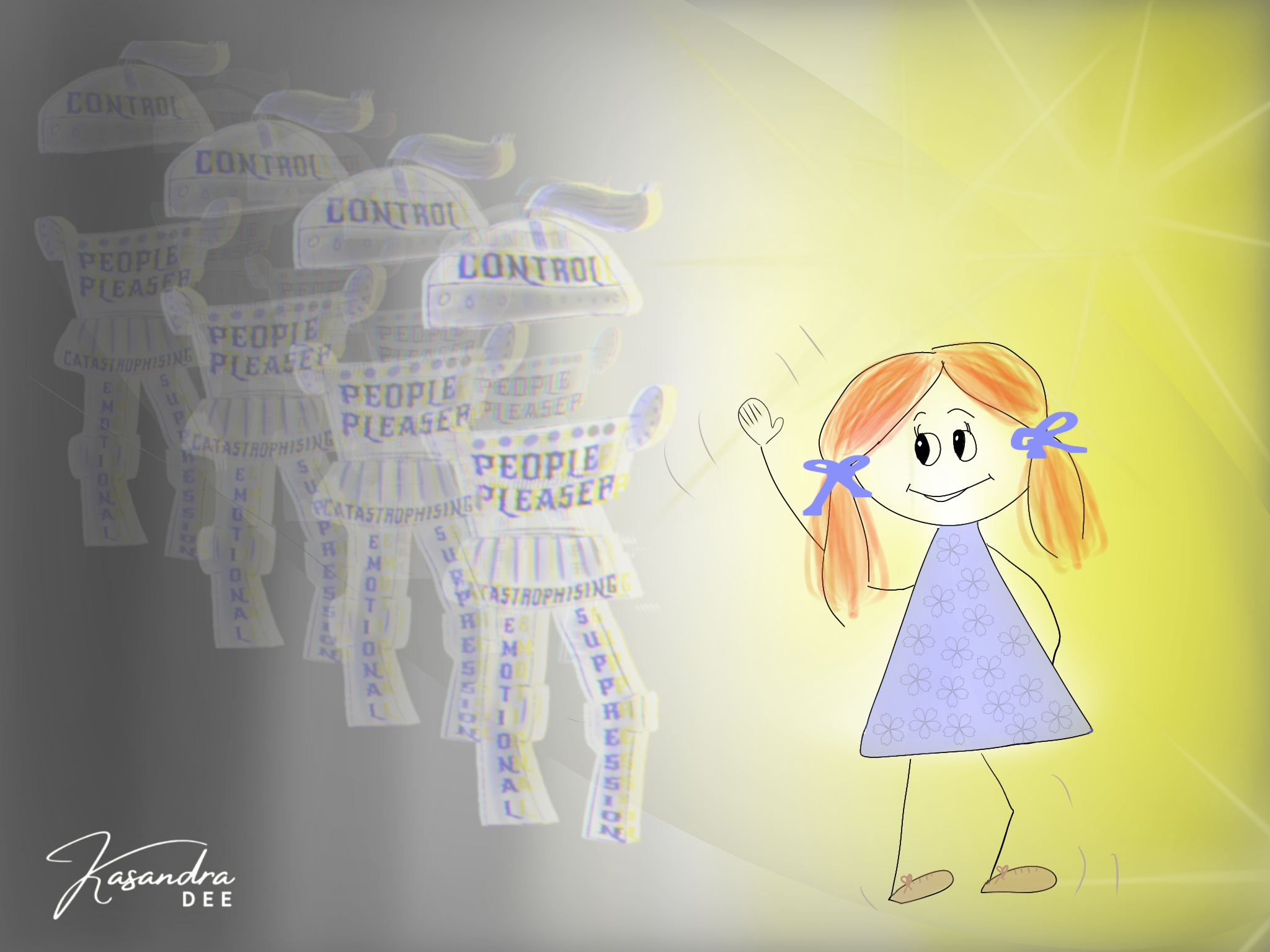
Laying down my “survival armour” felt like losing me. I recognised I needed to put it down, but I didn’t know who I was without it.
In my last post, I shared how hypervigilance, people-pleasing, and catastrophising — traits I spent decades viewing as my character — were actually protective mechanisms I developed throughout my life.
Although I’m still working out who has been hiding beneath the layers, I have discovered a far softer, quieter, and more peaceful me. And I have become curious about discovering who I will find by identifying all of my protective parts.
I thought I was strong. Really, I refused to need anyone.
For as long as I can remember, I felt I had to be able to do it myself.
Managing things on my own meant I was strong, capable and self-sufficient. My catastrophising mind fully expected I would be a solo parent one day. And when that happened, I would manage, thank you very much.
Of course, being able to look after yourself is a strength. But for me, it also became maladaptive both in my work life and my personal life. There were many times when household chores got the better of me. Instead of calmly asking for help, I would reach breaking point and explode with emotion:
“Why do I have to do everything?” and “Why can’t you just see what needs to be done and do it?”
Under the surface, and unbeknownst to me, I was carrying a growing resentment from expecting myself to manage everything. I didn’t actually want to do everything. But asking for help seemed impossible. Somehow, needing help felt like I wasn’t coping — and I had spent a lifetime believing that coping was what made me strong and therefore valuable to others.
Perhaps that’s where control came in. If I couldn’t rely on others to make things feel manageable, I could at least make sure I had a plan.
I thought I was organised. Really, I was trying to control everything.
Once upon a time, I thought I was simply a really good organiser.
I liked having a plan. If there was a trip to organise, I was across it. I liked knowing where we were going, and that all the details had been taken care of. If I was the planner then I didn’t have to worry about what wasn’t being done.
I didn’t see any of this as control. I saw it as being helpful, organised and prepared.
During the Covid chaos we all lived through, I was planning a trip away with friends, and suddenly nothing was straightforward. Should we go? Would we be able to go? What if the rules changed? What if someone couldn’t come? There were so many unknowns.
And I struggled with the unknown. Instead of being able to sit with the uncertainty, I started questioning everything. Was it the right location? Was it too expensive? Should we find somewhere else? What would everyone prefer? I wanted everyone to be happy, but the more I tried to find the perfect solution, the more complicated I made everything. What had started as organising a simple trip had turned into me trying to solve every possible problem before it happened.
And I can see it now – I wasn’t just organising. I was trying to make the uncertainty go away while keeping everyone satisfied. Because If I could find the right solution for everyone, perhaps I could feel safe again.
By anticipating and owning problems and keeping things moving in the direction I thought they should go, I felt calmer. At some point, control had become my oxygen. It got me through the day, the week, the year.
The problem was that it didn’t just give me a sense of safety. I could become so focused on getting things right and preventing things from going wrong that I lost sight of the fact that not everything needed to be solved.
And the need to keep things under control extended beyond what was happening around me. I had become pretty good at keeping what was happening inside me under control too.
I thought I was emotionally regulated. Really, I had learnt not to feel.
I’ve written about this more fully in an earlier blog, so I won’t revisit it all here.
I grew up learning to keep my feelings to myself. And because I held it all in I thought I was emotionally regulated. I didn’t make a scene. I didn’t fall apart. If something hurt, I swallowed it and moved on. I thought that was strength and emotional intelligence.
It wasn’t. I was suppressing emotions I didn’t know how to process, and eventually they caught up with me in the most confronting way (read about that here). The only way to pick myself up again was forcing myself to feel what I had spent so long avoiding.
Through that long process, I’ve learnt that emotional regulation isn’t about controlling what I feel. It’s about allowing myself to feel it without believing I have to fix it, hide it or run from it.
On reflection I can see that keeping busy had been another way of doing exactly that. If I was always doing something, I didn’t have to sit still long enough to discover what was waiting underneath.
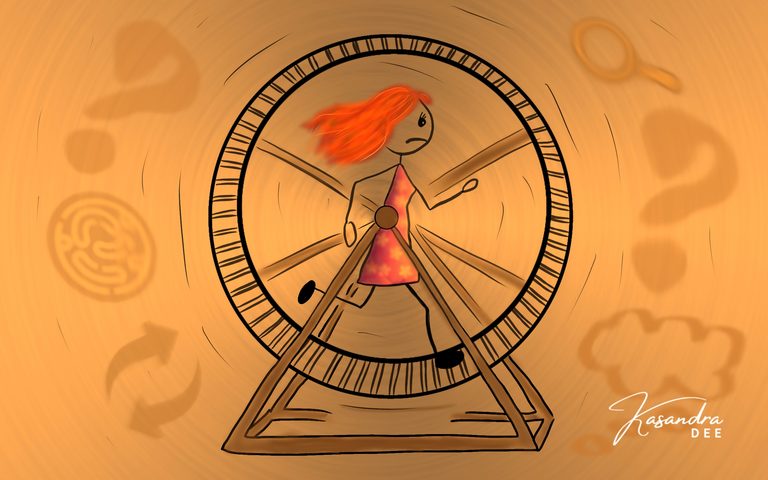
I thought I was productive. Really, I was afraid to stop.
My calendar was always full, my to-do lists were endless, and I always had a new project on the go. I considered myself productive and efficient, and I enjoyed being busy. After all, being a multitasker was part of who I was.
I always knew that when I slowed down, I became uncomfortable. I called it “cabin fever”. Hindsight has given me a clearer persepective. With nothing to do, there was nowhere to put my attention. And in the quiet, feelings I’d spent years keeping at a distance had a way of whispering to me.
So I kept moving.
It wasn’t until I had no choice but to stop that I began to understand just how much I’d subconsciously used busyness to keep myself distracted.
Once I was forced to stop running, I could finally hear myself. And by listening to what was there, I began to understand why I was dressed in protective armour — and, perhaps for the first time, just how heavy it had become to carry.
Putting Down the Weight
Looking at the array of protection I’ve added to myself, I feel a sense of grief for how much energy went into simply getting through life.
They developed because they were needed, but they had began to hurt more than they helped.
Letting them go isn’t easy. Rewiring my brain takes work, and there are still moments when I feel the pull to control, fix, keep busy or push a feeling away.
But I’m learning to pause and notice. And then to remind myself that I don’t have to solve, anticipate or outrun everything that’s on it’s way.
Healing for me is about becoming more comfortable being who I am without all the things I once thought I needed to be.
And perhaps, after all those years of simply surviving, I can finally begin to just be.