When Words Weren’t Enough: How Creativity Became Part of My Healing
All my life my body had been trying to tell me there was something I needed to heal.
For decades, I simply wasn’t able to hear it. Until the day I did.
In that moment, recovering memories became my primary focus. I believed that if I could just remember all of what had happened, everything would finally make sense.
Drawing: processing trauma through images and the subconscious
My therapist introduced me to drawing my dreams as a vehicle to access my subconscious memory.
She explained that dreams often weave together emotions, memories and experiences in ways that don’t always make logical sense.
My dream life had always puzzled me. It often involved themes of violence, highly sexualised situations or strange science fiction landscapes that seemed completely disconnected from my everyday life.
In one dream I was running a marathon—something I have never done, and have no desire to do. On completion of the race, I looked down to see my thigh muscle opening up. Worms began crawling out, and as I reached into the wound, I pulled out a battery. My only concern in the dream was whether the battery acid had leaked into my body.
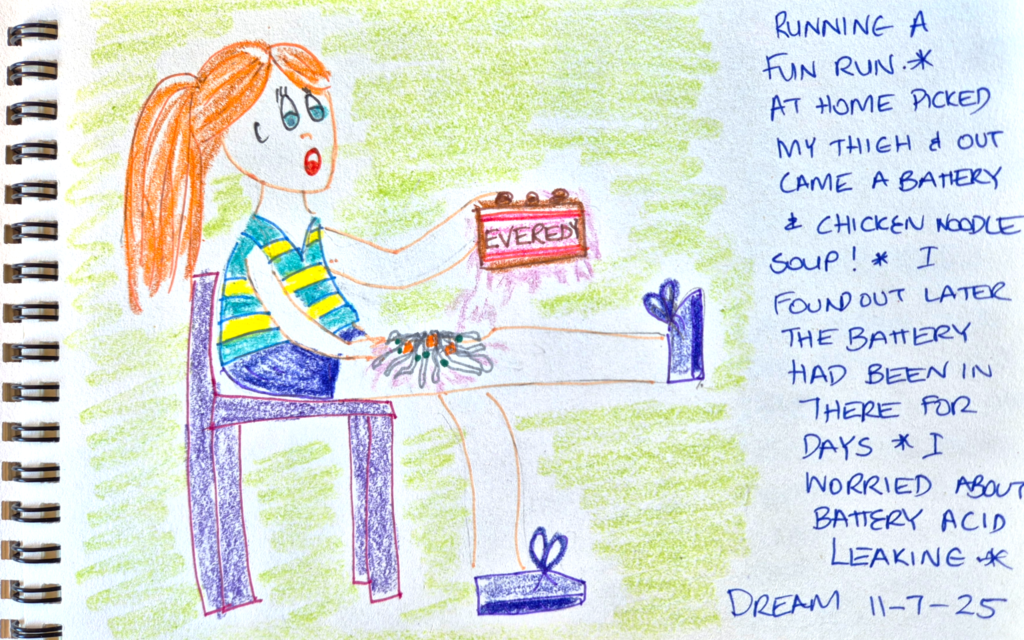
Running a marathon, worms crawling from my leg and a battery hidden inside me somehow all seemed perfectly reasonable while I was asleep.
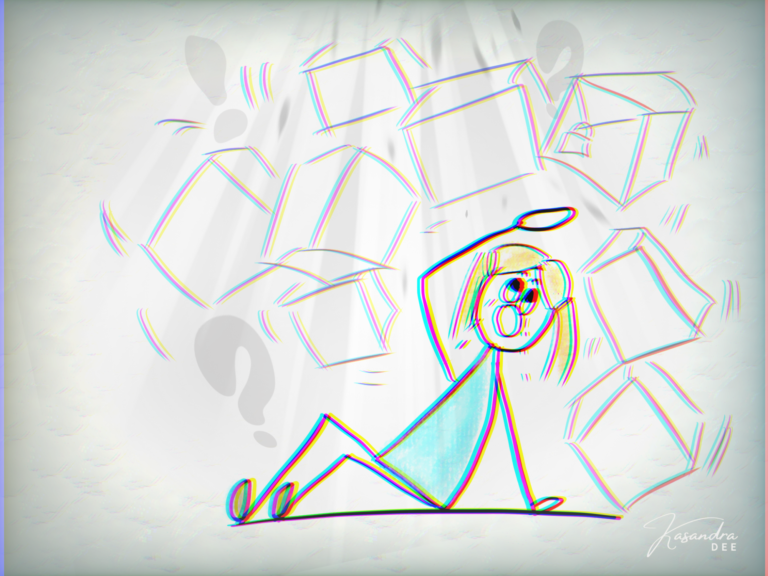
That’s the nature of the subconscious. It doesn’t always speak in facts or straightforward memories. Instead, it seems to communicate through symbols, emotions and images that don’t always make sense at the time.
Was the wound a metaphor? Did the worms or the battery represent something deeper? I don’t know.
Drawing dreams began as a way of exploring hidden messages, however it became much more useful than that to my healing. Drawing these images moved them and the emotion out of me and onto the page. Instead of carrying confusion or fear, I was able to approach the material with curiosity.
Over time, I realised I didn’t have to force anything to make sense right now. I’m learning to trust that, when the time is right, the threads will weave themselves into a picture I understand.
Writing: finding words for what I couldn’t express
I began journal writing to capture details and keep a record.
My journal is messy. It’s where I empty my thoughts, record difficult days, write down conversations, make sense of flashbacks and keep a timeline of my healing.
Time and again I find myself beginning writing feeling confused, only to finish with greater clarity, understanding and compassion for myself.
Writing this blog offers a different type of clarity. It asks me to step back, reflect and blend those scattered thoughts into something more meaningful.
Like many trauma survivors, I believed I needed to find the right words before I could say them. Instead, I’ve discovered that writing is often what helps me find the words that were already there.
Knitting: using repetitive movement to calm my nervous system
While writing gave my thoughts somewhere to land, knitting gave my body somewhere to rest.
As a healthy distraction to thinking about trauma and healing, I recently decided to return to knitting – something I hadn’t done for decades.
The autumnal colours of a particular yarn drew me in, and as soon as I touched it I knew it was the wool for me, despite having no idea what I would create from it. I bought the yarn and waited until the right pattern found me.
What I didn’t expect was how calming the knitting itself became. The gentle bilateral movement, repetitive rhythm and predictable stitches. Just enough focus to quiet my busy mind without creating additional pressure.
As my scarf grew, I didn’t want it to end, so I bought more yarn and turned it into a shawl.
It wasn’t just calming my nervous system, though. Somewhere along the way, knitting began teaching me other things about myself.
The first lesson was that I didn’t have to control outcomes from the start. My intuition to buy the yarn was right. I did find the perfect pattern.
The second lesson involved correcting a mistake I’d made while knitting. The only way to fix it was to unravel hours of work and start again.
For my unhealed self, that probably would have been the end of the project. I would have decided I’d wasted my time, wasted my money and grumpily packed it away.
Instead, I found myself thinking, I’ve learned something. The next version will be even better. Along with unpicking stitches I was unpicking an old belief that mistakes meant failure.
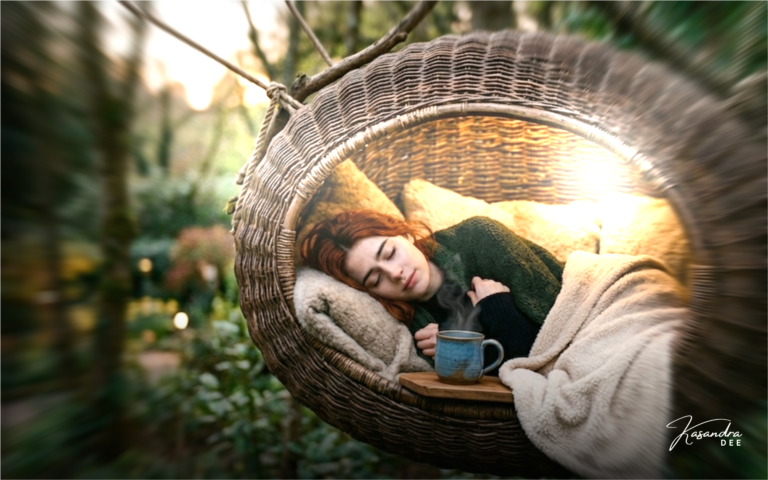
Those lessons have stayed with me. But they are only part of why I keep reaching for my needles. Knitting gives me the same feeling as sitting in my egg chair in the sunshine, gently rocking while listening to the birds. It’s calming, it’s soothing and it asks nothing from me.
Healing doesn’t always look like hard work. Sometimes it looks like trusting yourself, or knitting one more row. Sometimes it looks like unpicking hours of work because you know starting again isn’t failure—it’s part of making something stronger.
Baking: rebuilding confidence and breaking old beliefs
I have found throughout my ongoing recovery that creativity can be located in places you don’t expect it.
I’d always said I wasn’t much of a baker.
Cooking meals I quite enjoyed, but baking was something other people were good at, not me.
As I slowly began returning to everyday life, I focused on simple household routines — making the bed, cleaning the house, preparing meals.
Then, to fill in some time, I started baking.
I’d spent years telling myself I couldn’t bake muffins.
It turns out I can make really good muffins.
The enjoyment I’ve discovered in baking doesn’t just come from the finished result. It’s the process itself. Weighing. Mixing. Measuring. Cleaning up. Following familiar steps without having to think too hard.
Just like knitting, there’s a soothing rhythm to it. My hands know what comes next, allowing my nervous system to settle while my mind focuses on something restful.
Digital Art: finding my voice through creative expression
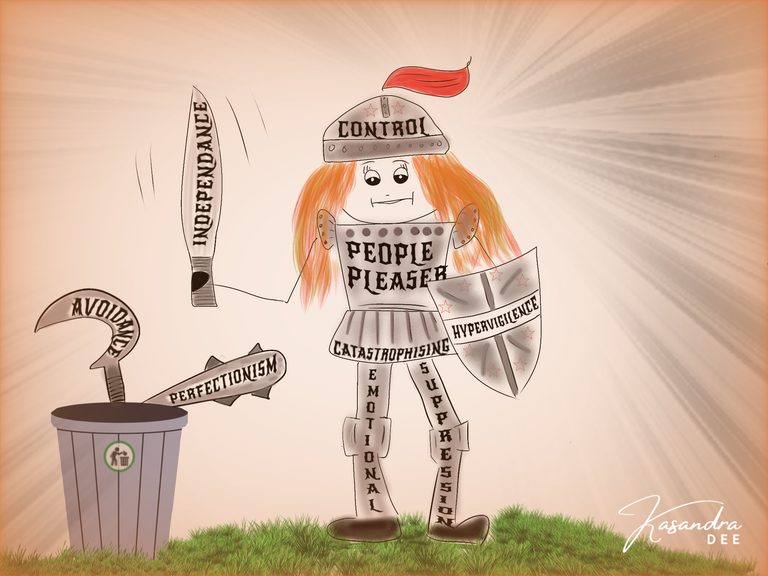
More recently, creating graphics for this blog and social media has become another unexpected part of my healing. Designing each image has helped me find the words—and the courage—to share my story.
For much of my life, I kept a lot inside me. Pressing Publish has often felt far more confronting than creating the graphic itself. Sharing such personal parts of my life leaves me feeling vulnerable every single time.
But each post is a small act of determination.
With every article, every graphic and every story I share, I become a little braver. I find myself willing to reveal a little more truth and a little more of who I am.
For me, creativity hasn’t simply been about making something I’m proud of. It’s been about slowly finding the confidence to let myself be seen.
Creativity has long been recognised as a valuable part of trauma recovery. It engages different parts of the brain than talking alone, it creates safety, and gives emotions somewhere to go.
But that’s not why I kept creating.
I drew because I hoped to uncover memories. I knitted to distract myself. I baked simply to fill the hours. And I wrote to make sense of what I was living through.
None of them gave me what I expected, but they all gave me what I needed.
Creativity didn’t erase my trauma, but it is helping me slowly build a life that isn’t entirely defined by it.
It helped me find moments of calm. It helped me reconnect with myself. And somewhere along the way, it helped me find my voice.