I Thought I Was Emotionally Regulated: I Was Actually Suppressing Everything
Feelings. Although I only recently become aware of this…. I was never really in touch with mine.
If you had asked me what I was feeling at any given time, my answers would have been limited to:
- happy
- frustrated
- and occasionally, furious
I would never have been able to identify emotions like mistrust, sadness, fear, invalidation, grief, loneliness. Or contentment, courage, curiosity. And I had no idea that every sensation in my body is telling me what I am feeling. They are an indication if I am living aligned with my values, that I am on the right path, that I am being treated fairly, that what I am choosing to do is the right thing for me.
If someone had asked me what was missing in my life, the answer would always have been the same – “peace”. I knew I didn’t have it. Although I wasn’t sure why, I knew something was wrong.
Looking back now, it makes complete sense.
Growing Up Without Emotional Safety
Typical parenting for many children raised in the 1970s was a “you’ll be fine” mentality.
I had always dismissed my experiences in childhood because so much of it was normalised. But I now recognise that my emotional (and sometimes physical) needs were consistently met with impatience. And that had impacts.
I grew up in a family where children’s feelings were not welcome — unless they came out as love, appreciation and happiness. Fear, anxiety, sadness, or emotional overwhelm weren’t welcomed or comforted.
Therapy taught me something important. The “harden up” mentality many of us were raised with was not always harmful in itself — resilience matters. But resilience is different from emotional invalidation. And when it comes to learning how to live with a healthy inner world, we as children, do not automatically know how to manage emotions — we learn emotional regulation from the adults around us.
Healthy emotional development happens both when a child’s feelings are acknowledged, soothed, and calmly guided and is modelled by the adults around them.
I didn’t receive that.
My developing brain learned that expressing emotions risked making someone mad with me. And that felt scary to me. Therefore, I adapted in the only way I knew how – I disconnected from myself in order to stay connected to others.
And so, as I moved through childhood and grew into an adult I lived with a developed belief about myself: my needs, emotions, and reactions were inconvenient and better kept to myself so as not to bother anyone.
Becoming “The Good Girl”
That childhood pattern continued all through my life. Because I knew no different, I pushed my feelings down. That, to me, was what being a “good girl” meant.
Without realising it, I became highly skilled at suppressing emotions. I thought suppression was maturity. I thought it meant I was emotionally controlled and therefore easy to be around.
And to be fair, emotional suppression did develop qualities I admired in myself:
- resilience,
- empathy,
- insight,
- responsibility,
- intuition,
- creativity,
- independence,
- and the ability to care for others during crisis.
These strengths were real. But they came at a cost.
The Signs I Didn’t Understand
For decades, I moved through life believing certain struggles were simply character flaws I needed to fix.
I was:
- easily frustrated,
- unable to switch off my constantly busy mind,
- deeply uncomfortable with any form of disagreement or conflict,
- terrified of disappointing others,
- excessively people-pleasing,
- unable to ask for what I needed,
- and often unable to even identify my own preferences if they differed from someone else’s.
Something as small as complaining about a bad coffee order or asking a loved one why they were withdrawing from me felt impossible.
Decision-making became exhausting because I was constantly scanning other people’s reactions and needs before considering my own.
I sabotaged myself in many great jobs because I didn’t know how to deal with uncomfortable moments. Instead I would find and excuse and leave.
For years, I worked hard on “fixing” these traits through mindset work and self-development.
What I didn’t understand was this – I could not mindset my way out of survival responses my nervous system learned in childhood.
What Emotional Suppression Actually Does to the Body
Emotions are designed to move through us. When they are continually pushed down, the body still carries them.
And so, because I wasn’t listening, my body told me it could no longer cope with holding a lifetime of feelings. During a series of deeply emotional events (which I write about in this blog post), I reached my breaking point. I learnt that emotional suppression was no longer sustainable.
Research has linked chronic emotional suppression to increased anxiety, stress-related illness, nervous system dysregulation, emotional outbursts, exhaustion, and even reduced lifespan.
For me, emotional suppression showed up as:
- chronic hypervigilance disguised as competence,
- constant over-functioning,
- a fast heart rate and frequent heart flutters,
- a raft of physical issues for which my doctor could not find a cause for,
- exhaustion and emotional flooding,
- irritability and overwhelm,
- disturbing dreams,
- catastrophising and intrusive thoughts,
- rumination and anxiety,
- disproportionate reactions to seemingly small situations,
- a confusion about who I really was.
Because I suppressed emotions, I never really knew:
- what I genuinely wanted,
- what I truly felt,
- what I enjoyed,
- or what my body was trying to tell me.
I also experienced a loneliness that disguised itself as independence. Because I didn’t understand what was happening inside me, I processed everything privately. Outwardly I appeared capable. Internally, I was confused and becoming increasingly overwhelmed.
When My Nervous System Finally Collapsed
I was responding to the events of 2024 in the only way I knew how – by pushing the emotions down to keep functioning. I thought suppression was how I would survive that unbearable year.
Eventually, my nervous system could no longer sustain the pressure of over-functioning and lifelong suppression. I didn’t know how to listen to my body, and so my body stopped cooperating.
There was a tipping point.
During that period, I was also recovering memories of childhood sexual harm. And I assumed that confronting those memories would be the hardest part. But what ultimately overwhelmed my nervous system was the betrayal I felt when people I believed would walk beside me through that journey, chose not to.
A phrase I have heard all my life still drops into my mind at times – “Don’t be ridiculous.”
Rebuilding my nervous system has required me to slowly unlearn emotional suppression and allow myself to experience what I feel.
I am learning that what I feel is not ridiculous.
I am not ridiculous.
Next Blog Post: What Does It Mean to Process Emotions?
In my next post, I’ll talk about what emotional processing actually is — because for many of us who learned suppression instead of regulation, even identifying emotions can feel unfamiliar and unsafe.
*Everyone’s trauma is different. How trauma affects people is individual. These have been my experiences and what I have learnt about myself through various channels however they are not designed to replace your own therapeutic advice or intuition.
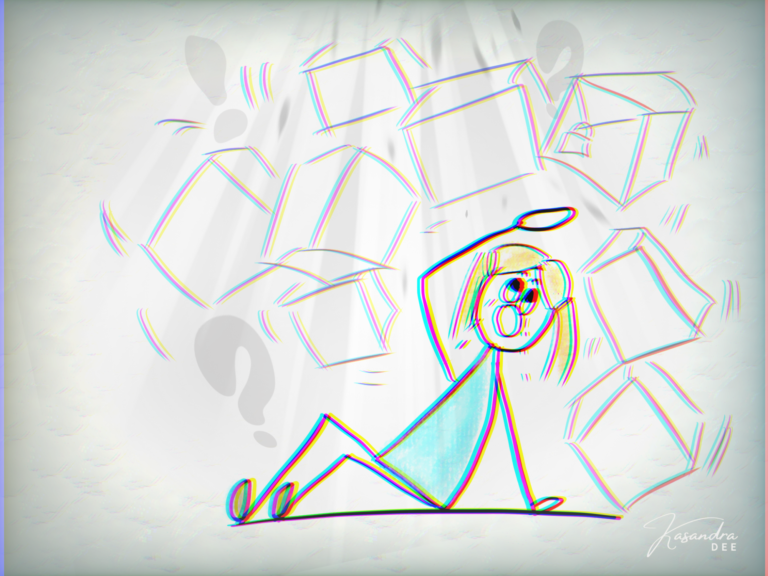
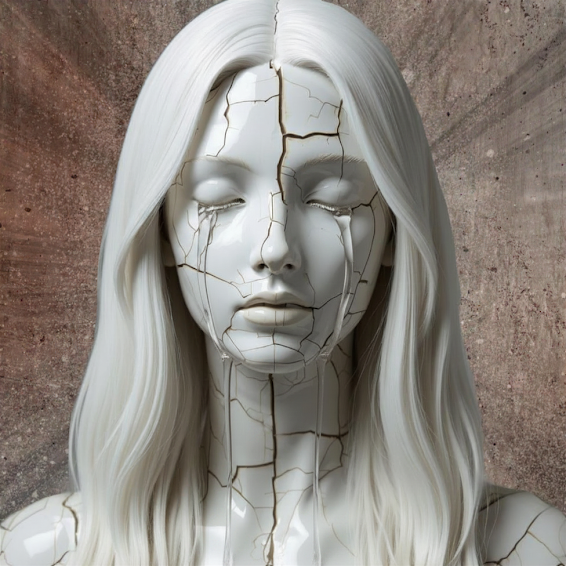
**Digital Art by Kasandra Dee (using some AI elements)