When Fear Felt Like Home: Why I Kept Choosing Unsafe Spaces
We’ve all wondered why we sometimes keep returning to relationships and situations that leave us feeling small, exhausted, or unsettled.
It seems strange to keep in contact with people who make us feel this way. Why do we keep falling into the same exhausting roles, even when some part of us knows something isn’t right?
It was happening in my life and I didn’t know how to fix it.
The Invisible Pattern
I had always known that the people I felt most comfortable with shared similar personalities. And that the things they considered acceptable could be very different from what felt right to me. Over time in these relationships, I found myself feeling diminished, uncertain of myself, and increasingly careful about what I said and how I said it.
As I began to heal, I started looking inward. Why did I continually put up with the same behaviour? Reading my past journals now fills me with deep sadness. I was having the same conversations with myself over and over again. After some interactions I would question myself and wonder whether I had done something wrong. I’d also reprimand myself for not standing up for what I needed in the relationship.
Sometimes, I would talk to one of them about how another had treated me. They would become indignant on my behalf, telling me how unfairly I had been treated. And I would sit there, confused. Was I living in some parallel universe? Did they genuinely not remember? How could they recognise the behaviour so clearly when it was directed at me, yet not see it when I experienced it from them?
The fear inside me kept me from speaking up. And I had reasons to stay. They were family. That’s just who they are. I was being the bigger person. I had probably said something wrong. I should have handled things differently. Who was my circle if it wasn’t them?
I knew the pattern was there. What I didn’t understand was why I couldn’t seem to break it.
Growing Up on Eggshells
Research suggests that by age seven, our subconscious has already formed an internal map of what love, connection, and relationships feel like.That early template shapes what we recognise as familiar, and what feels familiar can feel like home—even when it isn’t healthy.
I lived much of my childhood in anticipation of the next thing that scared or intimidated me. Or what I might do to frustrate someone. I learned to read subtle—and not-so-subtle—cues, trying to avoid being annoying, flawed, or in the way.
To protect myself, I learned to stay quiet. To be the good girl. To avoid saying the wrong thing. I kept my opinions and needs to myself so nobody would be frustrated with me. I didn’t know it at the time, but my body was learning that this was what it meant to be in relationship with others.
So when I encountered those same feelings in adulthood, they didn’t at all feel like a warning. They were familiar. My body knew them as connection, before I had the chance to question them.
The Magnetism of the Familiar
I didn’t consciously go looking for conditional friendships. But I was drawn towards people whose behaviour I knew how to navigate.
When someone was warm, steady and consistently kind, my nervous system didn’t quite know what to do with them. Calm felt unnatural. Nice could feel odd. Even a little boring.
But when someone was snappy, sharp, a little nasty at times, unpredictable, or prone to giving me the cold shoulder, I recognised the game immediately. I liked them. And I genuinely did.
At times, people I felt closest to would withdraw from me. This became a common and painful experience in a number of my relationships. Some time would pass without contact and I’d think, That’s odd. I haven’t heard from her in a while. So I’d reach out.
The response might range from curt and stand-offish or cold to openly hostile. And my first thought was never, This person is treating me poorly. It was always, What did I say? What did I do? What do I need to fix?
I would fawn. Sometimes apologise. Always try harder. Then, when nothing changed, I would give them space. Eventually, they would return in their own time – sometimes months later – without addressing what had happened.
And neither would I. Of course I wouldn’t. I was terrified of conflict.
Instead I would welcome them back, and something remarkable would happen inside my body. I would relax. The tension my entire body had held for however long they had been distant would instantly release. Something would surge through me—an almost intoxicating rush that felt like a drug coursing through my body. The relief was tangible and overwhelming.
I had mistaken the relief of the panic ending, for genuine care. The person hadn’t suddenly become safe. I had simply stopped feeling threatened.
And somehow, my body interpreted that relief as connection.
Hindsight Is a Wonderful Thing
I want to be careful here, because I wasn’t perfect either.
There were times I reacted badly. Times I could have communicated better. Times that I could have been less frustrated, more mature, more direct, or simply more willing to listen.
But I can also see how little I understood about myself at the time. I was trying incredibly hard to keep these connections together—adjusting my behaviour, trying to communicate better, and constantly looking for what I could do differently. I was far more focused on being acceptable to other people than I was on understanding what was actually happening on both sides of those relationships.
During one conversation while “breaking up” with a friend, she said, “I must be a really shitty person if Kasandra’s not forgiving me.”
It made me stop and consider: was I being kept in a kind of push-pull, where I was expected to forgive, reassure, soften my boundaries, and make other people feel that they weren’t bad people?
It made me wonder whether, all along, I had been pulled into taking responsibility for other people’s feelings—even when I was the one who had been hurt.
Unlearning the Storm
It has taken time to offer grace to the version of me who stayed in these relationships.
I no longer look back at her with shame for staying somewhere she repeatedly felt inadequate or not enough. She was using a map drawn in an unsafe environment, trying to maintain connections with the only tools she knew.
Unlearning that doesn’t happen overnight. I am still learning. But today, when my gut tightens, I try not to talk myself out of it. I listen. I remind myself that discomfort doesn’t always mean I’ve done something wrong. And peace does not have to be earned by keeping everyone else happy at my expense.
Above all else I have learnt that interactions with safe people leave me feeling more like myself. There is no need to replay the conversation, search for what I might have done wrong, or work out how to make things right. I can simply be myself and let the connection be what it is.
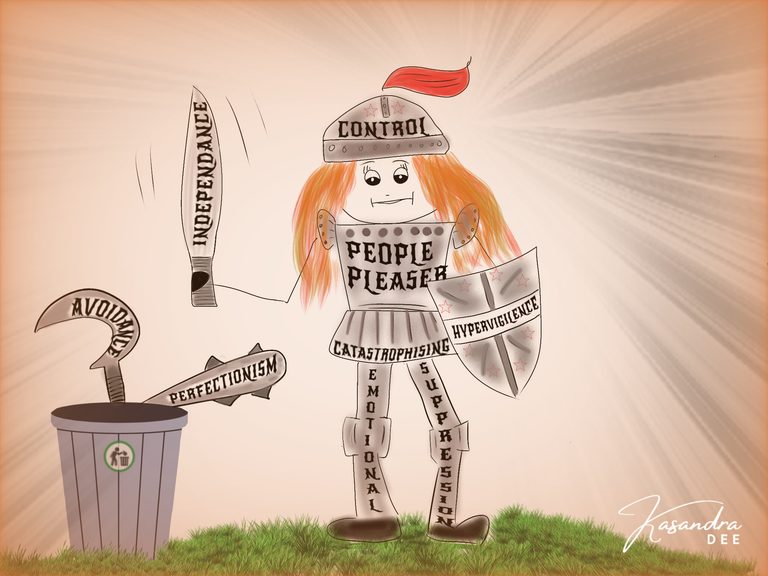
Recognising these patterns was painful, but it eventually led me to something deeper. There were all sorts of other ways I had learnt to navigate relationships and to keep the peace in order to stay connected. And I no longer wanted to surround myself with people who made me feel the way I had felt in those relationships. I wanted to come home to a version of myself who no longer felt afraid to be herself.
So I’m choosing to build a place that feels different, where I finally live where I belong.