Healing the Nervous System: What Yoga and Breathwork Taught Me About Trauma Healing
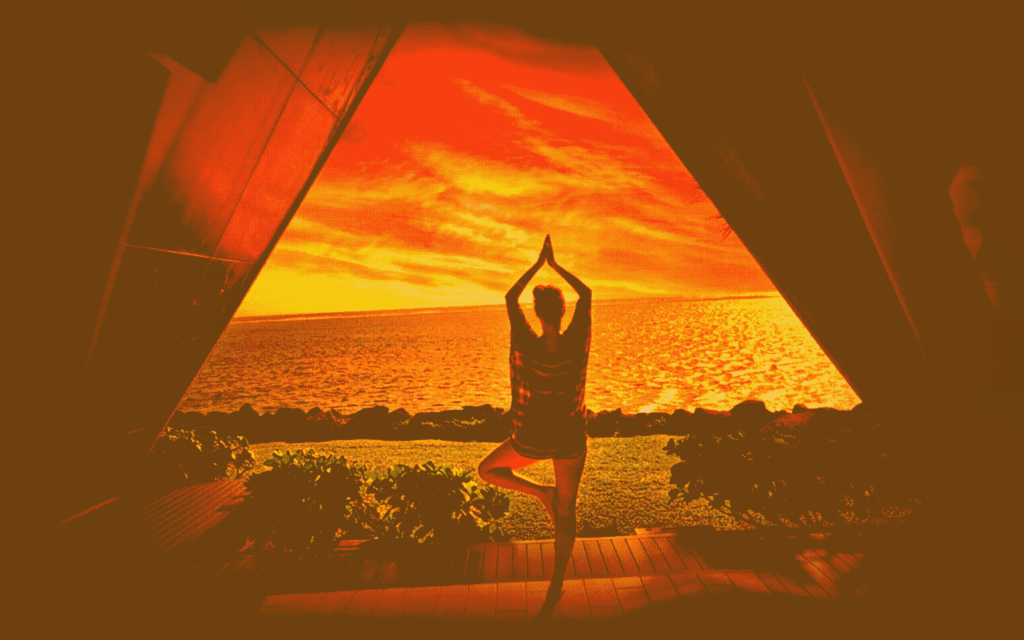
I first tried to attend a yoga class in high school. Usually I was not interested in any PE activities, but I was strangely excited to try yoga.
I was pulled out of the class before I ever got to try.
My mother came to school and removed me from the class. She believed yoga was spiritually dangerous, as some churches were teaching at the time. There was no discussion. That was just that.
The pull towards yoga didn’t subside. Five years ago, I finally walked into a class and felt something I hadn’t felt in years: relaxed. Properly, deeply relaxed. My muscles relaxed. My breath felt slow. My mind fell quiet.
What exercise taught me about my nervous system
I have always avoided intense exercise. Friends talked about the exhilaration of finishing a hard workout, but I never understood it. Instead of feeling accomplished, I’d leave feeling tense, snappy, and completely drained.
I thought I wasn’t made for ‘real’ exercise.
Years later, I wondered if my body had been trying to tell me something all along. Some trauma-informed practitioners suggest that when a nervous system is already living in a constant state of activation, adding more stress through rigorous exercise may not feel releasing at all.
Looking back, I don’t think my body was refusing movement. It was searching for a gentler way while feeling safe.
Entering yoga and noticing the contrast
Yoga came to me long before I would come to understood its role in my healing. I didn’t start because I knew anything about nervous systems or that I had a dysregulated one; I started simply because I had always been drawn to it.
The first time I attended a yoga class, I felt something unfamiliar — peace. Almost every yoga class ends with savasana. I’ve had friends say they go to yoga simply for this pose, and I understand why. It completely relaxes the body and mind, allowing everything to settle. Whilst I had no awareness of how disconnected I was from my body – that work was yet to come – something in me recognised the power of lying still in savasna and breathing. Just inhaling and exhaling.
Frustratingly, the calm generated in my body during class didn’t travel with me as I left. The contrast was sharp. Stepping into the world felt loud, intrusive and demanding again. Like the breath I found had disappeared. My yoga teacher couldn’t explain why this happened.
I have since learned that some trauma therapists believe people with dysregulated nervous systems can experience this heightened contrast. Returning to everyday life after feeling deeply regulated can feel surprisingly jarring.
Those classes were the first time I ever fully stepped out of the constant noise of my life. It would take years before I understood how foundational that practice would become for my healing.
The breaking point and the bedroom floor
My nervous system breakdown was unexpected but unavoidable (I write about that here). It was the hardest thing I have ever been through.
There were mornings when the weight of getting through the day — or even the next hour — felt unbearable. When I finally left my bed, it wasn’t because I wanted to; it was because life required it of me.
But regardless of how I felt, most days I could find the bedroom floor and fold into child’s pose.
Sometimes I stayed there for ten minutes. Sometimes I cried. Sometimes I could only notice my breath as something steady to hold onto.
In time though, one movement became two. Two became five. And slowly, I found myself standing more often. I never woke up suddenly “fixed,” but I did begin to feel something shift in very small increments. One percent better. Then another. And then another.
Healing wasn’t dramatic enough for me to notice while it was happening. I only saw it in hindsight — not as one breakthrough, but as repetition. My mat and my breath. A return to both each day.
What yoga slowly changed
Yoga asked me to do something my old life never did – slow down on purpose.
Instead of rushing, I stayed with things – a stretch, a breath, a moment of stillness. Instead of overriding my body, I began noticing it.
Over time, this began to extend beyond the mat.
I started noticing my breath in traffic, in disagreements, in the supermarket. It didn’t fix things, but it gave me a pause – a small space where there used to be none.
I noticed stress in my posture, and my teacher’s cues would come back to me— shoulders down, spine long, crown lifted. A quiet reminder to my mind: Relax.
I began to understand yoga less as something to “do well,” and more as something to return to. Some days that return is movement. Other days it is breath. And occasionally it is simply stopping long enough to notice what is happening inside me. All of it counts.
Yoga slowly became less about practice on a mat, and more about practice in life.
Where I am now
Although I pop into yoga class from time to time, I haven’t made it back consistently yet – that’s a step I’m still working up to, and I’m listening to my body for when the time is right.
But a yoga mat on my bedroom floor has become one of the steadiest things in my life. My mat has never promised to fix me. It has simply met me exactly where I am, consistently. Sometimes it means simply choosing the slower path when everything around me seems to speed. And I’m learning that is allowed to be enough.
Only years after starting my yoga practice did I recognise my body had quietly been preparing me for safety and something that was once framed for me as unsafe ended up becoming part of what brought me back to myself.
Therapy has helped me understand my story.
Yoga helped my body believe it.